What Nobody at the Counter Tells You
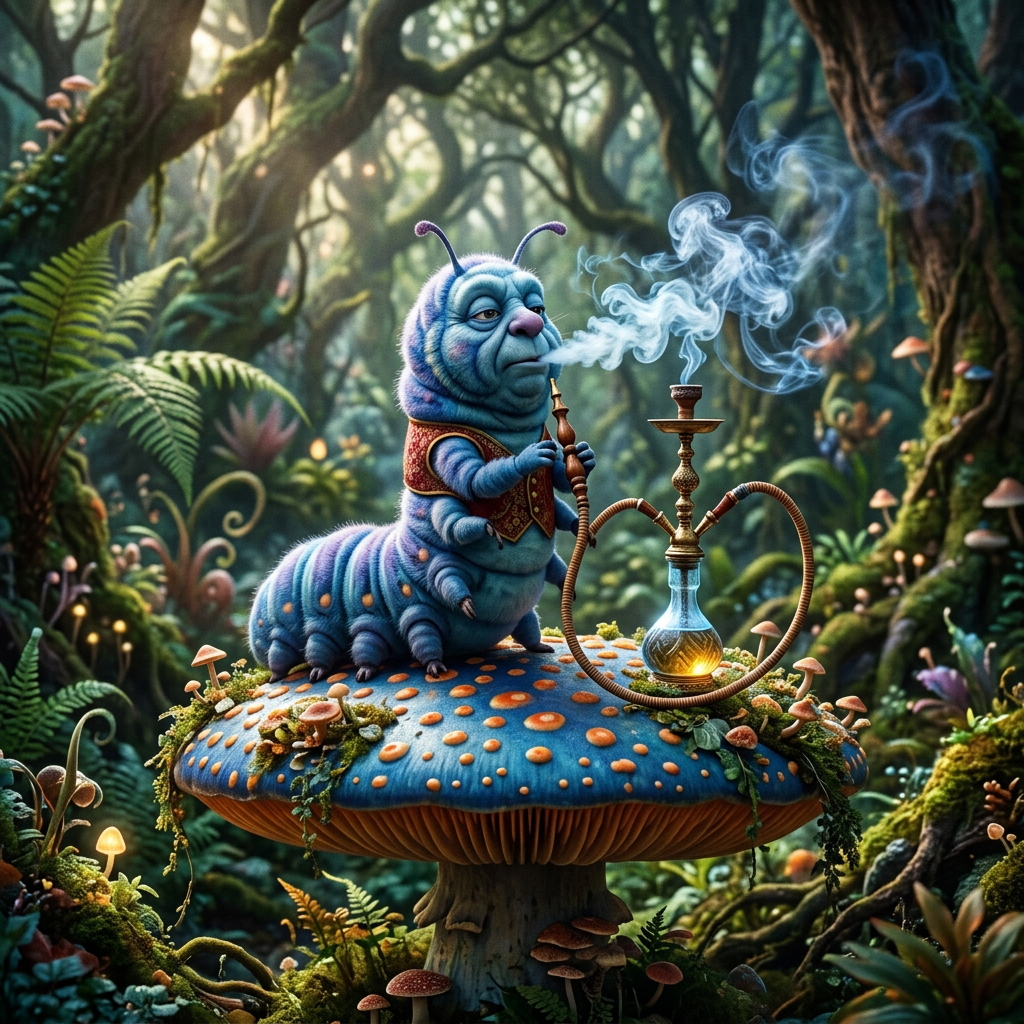
It’s Alice and the rabbit hole. The scent hits you before your eyes adjust — earth and pine and something sweet and skunky, layered and alive. Colors everywhere. Labels. Logos. Jars lined up in perfect rows behind the counter. The hum of a room full of people who all came here knowing what they wanted and are suddenly not sure anymore. “Remember what the Dormouse said.” You’re going to need a minute.
Then your eyes adjust. Your brain catches up. And somewhere on the other side of a very sleek counter, a budtender is waiting patiently for you to find your words. For a lot of people, those words are some version of: “What’s the strongest thing you have?”
It’s not a stupid question. But it might be the wrong one.
The Number on the Label Is Not the Whole Story
For years, the cannabis industry sold potency like proof on a bottle of whiskey — higher meant stronger, stronger meant better, better meant you got your money’s worth. And consumers bought it. Literally.
The race to 30%, 35%, 40% THC became its own kind of marketing. Brands chased the number. Labs — well, let’s just say testing has had its moments of creative interpretation. And consumers kept pointing at the highest figure on the menu board and saying that one.
Here’s what that number doesn’t tell you: how you’re going to feel.
THC percentage measures one compound in a very complicated plant. It tells you the concentration of the molecule most associated with psychoactive effect. What it doesn’t tell you is anything about the terpenes — the aromatic compounds that shape, modulate, and in many cases determine the actual experience. Myrcene. Limonene. Caryophyllene. Linalool. These aren’t marketing language. They’re the reason two strains at the same THC level can feel completely different from each other.
A 28% flower heavy in myrcene is going to put you on the couch. A 22% flower loaded with limonene might have you reorganizing your kitchen at midnight. The number didn’t tell you that. The terpenes did.
The Entourage Effect Isn’t a Theory Anymore
The idea that cannabinoids and terpenes work together — that the whole plant produces something the isolated molecule doesn’t — has moved well past hypothesis. It’s the reason full-spectrum products hit differently than distillate. It’s the reason experienced consumers stop chasing THC percentages and start asking about the terp profile instead.
This is what good budtenders know and what the label often doesn’t say loudly enough: the entourage effect means you’re not just consuming THC. You’re consuming a system. And the system matters more than any single number.
The Better Question to Ask
Instead of “what’s the highest THC you have,” try “how do I want to feel?”
Energized and focused? You’re probably looking for something sativa-leaning, high in limonene or pinene, moderate THC. Creative and social? Similar direction, different terpene profile. Deep relaxation, body relief, sleep? Indica-dominant, myrcene-forward, and potency matters a little more here because the goal is different. Anxiety management? This is where high-THC can actually work against you — CBD ratios and calming terpenes like linalool often do more.
The dispensaries doing this well have trained their budtenders to lead with that question. Not “what’s your budget” and not “indica or sativa” — which is increasingly understood to be an oversimplification anyway — but “what experience are you looking for?”
That’s where the conversation gets interesting. And that’s where you actually get what you came for.
High potency has its place. But chasing a number without understanding what’s behind it is like ordering the most expensive wine on the menu and hoping for the best. Know your terpenes. Trust your budtender. And ask better questions.

